

A car accident can happen in a matter of seconds, leaving drivers and passengers confused about what to do next. Even after a minor collision, knowing the proper safety and first aid steps can help protect everyone involved and ensure that injuries receive appropriate attention.
After a car accident, the priorities are safety, checking for injuries, contacting emergency services when necessary, and getting medical attention when appropriate. Some injuries may not be immediately obvious, which is why paying attention to symptoms after a crash is important.
For prospective healthcare students, understanding what to do after a car accident is also a useful introduction to basic emergency response. Healthcare professionals may encounter patients involved in motor vehicle accidents and need to know how to assess situations, recognize warning signs, and respond calmly.
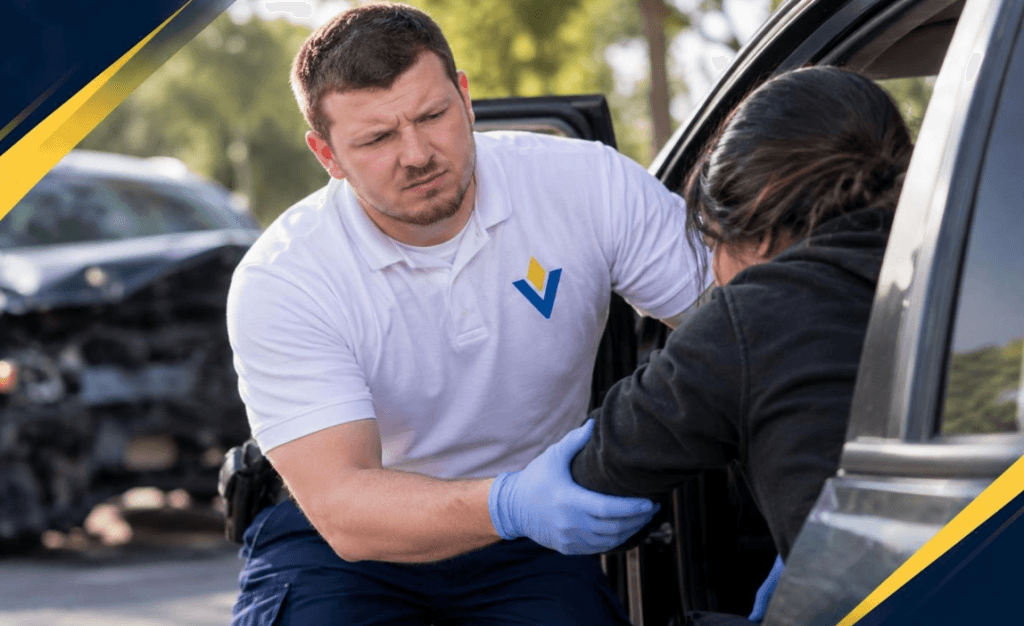
What Should You Do Immediately After a Car Accident?
The moments immediately following a crash can be stressful. Try to remain calm and focus on safety first.
1. Check Yourself and Others for Injuries
Before doing anything else, assess yourself and the people around you for signs of injury.
Look for symptoms such as:
- Severe pain
- Heavy bleeding
- Difficulty breathing
- Loss of consciousness
- Confusion or unusual behavior
- Weakness or numbness
- Severe headache
- Dizziness
- Neck or back pain
- Difficulty moving
If someone has a serious injury, avoid moving them unless there is an immediate danger, such as a vehicle fire.
2. Move to a Safe Location if Possible
If the vehicles can be moved safely and there are no serious injuries preventing movement, move the vehicles out of active traffic when appropriate.
Turn on hazard lights and stay away from moving traffic. If the vehicle cannot be moved, remain in a safe location and follow instructions from emergency personnel.
Do not put yourself at additional risk by standing in traffic or approaching a dangerous vehicle.
3. Call 911 When Necessary
Call 911 when anyone has a serious injury, significant bleeding, difficulty breathing, loss of consciousness, severe pain, or another potentially life-threatening condition.
Emergency medical services can assess injuries and provide treatment at the scene or transport someone to a medical facility when necessary.
Even if an injury does not initially appear serious, symptoms can develop later. When there is concern about a potential injury, professional medical evaluation is appropriate.
Basic First Aid After a Car Accident
Knowing basic first aid can be especially important when emergency services have not yet arrived.
Control Severe Bleeding
If someone is experiencing severe external bleeding, use clean gauze or cloth and apply firm, steady pressure to the wound when it is safe to do so.
Do not remove an object that is embedded in a wound. Instead, apply pressure around it and wait for trained medical professionals.
Severe bleeding requires immediate emergency assistance.
Check for Breathing Problems
If someone is unconscious and not breathing normally, emergency services should be contacted immediately. If you are trained in CPR and it is safe to intervene, begin appropriate emergency response while waiting for professional help.
Following instructions from the 911 dispatcher can also help guide you through the situation.
Be Careful With Possible Neck and Spinal Injuries
Car accidents can cause injuries to the head, neck, and spine. If someone is complaining of severe neck or back pain, has weakness or numbness, or cannot move normally, avoid unnecessary movement.
Wait for emergency responders whenever possible. Moving someone with a serious spinal injury incorrectly can potentially make the injury worse.
Help Keep the Person Calm
An accident can be frightening, particularly for someone who is injured or experiencing shock. Speak calmly, reassure the person, and keep them as comfortable as possible while waiting for emergency assistance.
Simple communication can help reduce panic and allow responders to gather important information when they arrive.
Do You Need to See a Doctor After a Car Accident?
Not every accident results in an obvious injury. However, some injuries may take hours or even days to become noticeable.
Consider seeking medical evaluation after a car accident if you develop:
- Neck or back pain
- Persistent headaches
- Dizziness or confusion
- Nausea or vomiting
- Blurred vision
- Abdominal pain
- Chest pain
- Difficulty concentrating
- Numbness or tingling
- Muscle or joint pain
- Unusual fatigue
- Changes in movement or coordination
A healthcare professional can evaluate your symptoms and determine whether additional testing or treatment is needed.
If you experience severe symptoms, difficulty breathing, loss of consciousness, heavy bleeding, severe chest or abdominal pain, or other signs of a medical emergency, seek emergency medical care immediately.
Why Some Car Accident Injuries Are Not Immediately Obvious
Adrenaline can temporarily mask pain following a stressful event. As the body begins to return to normal, symptoms may become easier to notice.
Soft tissue injuries, such as strains and sprains, may become more noticeable later. Head injuries can also present with symptoms that are not immediately apparent.
This is why it is important to monitor how you feel after an accident rather than assuming that you are fine simply because you did not feel pain immediately after the crash.
What Should You Avoid After a Car Accident?
Knowing what not to do can also help prevent additional injuries.
After an accident, avoid:
- Leaving the scene without following appropriate safety and legal procedures
- Moving a seriously injured person unless there is immediate danger
- Ignoring symptoms because the accident seemed minor
- Attempting medical procedures you are not trained to perform
- Standing in active traffic
- Removing embedded objects from wounds
- Driving yourself if you are experiencing serious symptoms or are not medically able to drive safely
Your safety and the safety of others should remain the priority.
What Information Should You Give Emergency Responders?
When emergency responders arrive, provide as much accurate information as possible.
Let them know:
- What happened
- Where the accident occurred
- Whether anyone lost consciousness
- Where anyone is experiencing pain
- Whether there is bleeding
- Whether anyone has difficulty breathing
- Whether symptoms have changed since the accident
- Any known medical conditions or medications, when relevant
Clear communication can help emergency personnel assess the situation and determine what care is needed.
Why First Aid Knowledge Matters for Future Healthcare Professionals
Understanding what to do after a car accident is one example of the emergency situations healthcare professionals may encounter.
Students pursuing healthcare careers can benefit from learning how to recognize injuries, identify warning signs, communicate with patients, and remain composed in stressful situations. Depending on their career path, students may eventually work in environments where emergency assessment and patient care are part of their responsibilities.
Learning first aid and emergency response can therefore provide valuable foundational knowledge for students considering careers in healthcare.
For prospective healthcare students in Miami, developing these skills can be an important step toward understanding what patient-centered care looks like in real-world situations.
Personalized Healthcare and Wellness Services in Miami
After an accident or other stressful event, taking care of your overall health is important. CMVC Clinic & Lab provides personalized healthcare and wellness services in Miami designed around individual needs and goals.
CMVC Clinic & Lab offers IV therapy, vitamin blends, injectables, weight loss solutions, and school and work medical entry exams.
IV therapy options include wellness-focused treatments such as Get Up and Go for energy, Feel Better Faster for immune support, and Brainstorm for mental clarity. The clinic also provides vitamin blends and targeted injectable services.
For students entering healthcare programs or professionals completing employment requirements, CMVC Clinic & Lab offers medical entry services including physical exams, drug testing, titers, TB testing, and vaccines.
These services provide convenient options for individuals who need medical requirements completed for school or work while also supporting their broader healthcare and wellness needs.
Take Your Health and Healthcare Education Seriously
Knowing what to do after a car accident can help you respond more effectively during a stressful situation. Start by prioritizing safety, checking for injuries, contacting emergency services when necessary, and seeking medical attention for concerning or developing symptoms.
For prospective healthcare students, situations like car accidents also demonstrate why healthcare education matters. Healthcare professionals need knowledge, preparation, communication skills, and the ability to remain calm when patients need help.
CMVC Clinic & Lab is committed to providing personalized healthcare and wellness services in Miami. Whether you are looking for wellness treatments, medical entry exams, or other healthcare services, our team can help you take the next step toward your health and wellness goals.
If you are interested in pursuing a healthcare career, developing your understanding of first aid and patient care is a great place to begin.