

Burns can happen in seconds. A person can get burned by a hot surface, boiling water, steam, fire, chemicals, electricity, or other sources of heat. While some burns are minor and can be treated with basic first aid, serious burns may require immediate emergency medical attention.
Knowing what to do for a burn can help reduce further injury while you wait for medical care. Understanding how to recognize a serious burn is also important for anyone who wants to work in emergency healthcare.
For aspiring Emergency Medical Technicians, burn injuries are one of the many types of emergencies covered through trauma assessment and emergency response training.
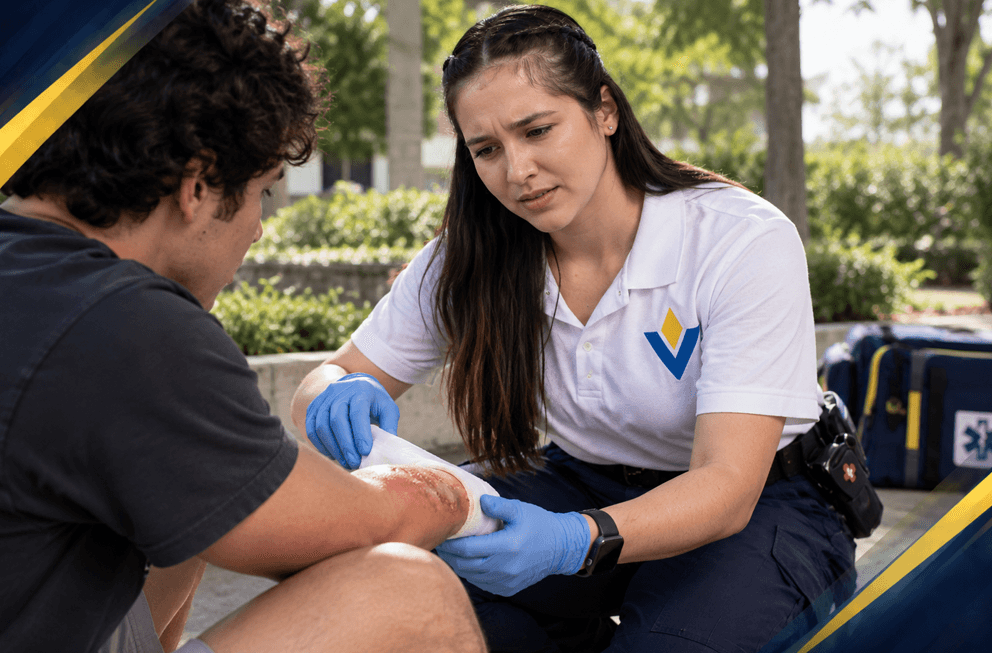
What Should You Do for a Burn?
The appropriate first aid for a burn depends on its severity and cause. For a minor thermal burn, the first priority is to stop the burning process and cool the affected area.
General first aid steps include:
- Move away from the source of the burn. Make sure the person is away from flames, hot liquids, steam, chemicals, electricity, or other sources of injury.
- Cool the burn with cool running water. For a minor thermal burn, gently cool the area with cool running water for about 20 minutes. Avoid using ice directly on the burn because extreme cold can further damage injured tissue.
- Remove nearby jewelry or restrictive items. If possible, remove rings, watches, or other items near the burned area before swelling develops. Do not remove anything that is stuck to the skin.
- Protect the burned area. After cooling, cover the burn loosely with a clean, nonstick dressing or clean cloth.
- Do not pop blisters. Blisters help protect damaged skin underneath. Breaking them can increase the risk of infection.
- Seek medical care when necessary. Larger, deeper, or more serious burns may require professional evaluation and treatment.
What Should You Not Put on a Burn?
There are many home remedies for burns that can actually cause additional problems or make medical treatment more difficult.
Avoid putting substances such as:
- Ice directly on the burn
- Butter
- Cooking oil
- Toothpaste
- Creams or household products not intended for burn treatment
Do not peel away burned or damaged skin, and do not remove clothing that has become stuck to the burn.
When a burn is serious, getting professional medical attention is more important than attempting to treat it with household remedies.
When Is a Burn a Medical Emergency?
Not every burn requires an ambulance, but certain burns should receive immediate medical attention.
Call 911 if a person has a serious burn, particularly if the injury:
- Covers a large area of the body
- Appears deep or involves extensive tissue damage
- Is located on the face, hands, feet, major joints, or genitals
- Was caused by an electrical source
- Was caused by a chemical
- Is associated with difficulty breathing
- Occurred after a fire or explosion
- May involve smoke inhalation
- Occurred along with another serious injury
When in doubt about a potentially serious burn, seek professional medical guidance.
How Do You Know If a Burn Is Serious?
Burn severity depends on factors such as depth, size, location, and cause.
First Degree Burns
A first degree burn affects the outermost layer of skin. The skin may appear red and painful but generally does not have significant blistering.
A mild sunburn is one common example.
Second Degree Burns
Second degree burns affect deeper layers of skin and can cause significant pain, redness, swelling, and blistering.
Larger or more serious second degree burns may require medical treatment.
Third Degree Burns
Third degree burns extend through the full thickness of the skin and can damage deeper tissues. The affected area may appear white, brown, black, or leathery.
Because these burns can cause extensive tissue damage, they require emergency medical evaluation.
What Causes Serious Burns?
Burns can have many different causes. Common sources include:
- House fires
- Hot water or other liquids
- Steam
- Hot objects
- Cooking accidents
- Chemicals
- Electrical sources
- Explosions
- Prolonged contact with heat
Burns can also occur alongside other injuries. For example, a person involved in a vehicle accident or building fire may experience burns, trauma, and breathing problems at the same time.
This is one reason emergency responders need training that covers more than one type of injury.
What Should You Do for a Chemical Burn?
Chemical burns require special consideration because the substance causing the injury may continue damaging tissue.
Move the person away from the chemical source while avoiding exposure to yourself. Remove contaminated clothing if it can be done safely, and follow emergency instructions regarding decontamination and flushing the affected area.
Call 911 or seek emergency medical care for serious chemical burns. If possible, provide emergency responders with information about the chemical involved so they can determine the appropriate response.
Do not attempt to neutralize a chemical on the skin with another chemical unless specifically instructed by a medical professional or poison control resource.
What Should You Do for an Electrical Burn?
Electrical burns can be particularly dangerous because the visible skin injury may not show the full extent of internal damage.
Before helping someone who has experienced an electrical injury, make sure the electrical source has been turned off and that the scene is safe.
Call 911 for significant electrical injuries, especially if the person is unconscious, has difficulty breathing, experiences chest pain, or has other concerning symptoms.
Electrical injuries can affect the heart and other internal tissues, so medical evaluation may be necessary even when the burn on the skin appears small.
How EMTs Respond to Burn Injuries
When EMTs arrive at a serious burn emergency, they must quickly assess the patient’s overall condition and identify other potentially life threatening injuries.
Depending on the situation and their scope of practice, EMTs may:
- Assess the patient’s airway, breathing, and circulation
- Determine how the burn occurred
- Evaluate the extent and location of the injury
- Monitor vital signs
- Look for signs of shock or other trauma
- Provide appropriate emergency care
- Protect the injured area
- Help prevent further heat exposure
- Assist with safe patient movement and transportation
- Communicate patient information to receiving medical professionals
Burn emergencies can be especially challenging because the patient may have multiple injuries at once. EMTs must be able to assess the situation, prioritize immediate needs, communicate with their team, and follow emergency protocols.
Why Burn Treatment Is Important for EMT Training
Learning how to respond to burns is part of developing broader trauma assessment skills.
EMTs may encounter burn injuries at house fires, vehicle accidents, workplace incidents, cooking accidents, electrical emergencies, and other situations. They must understand how to recognize serious injuries and provide appropriate care while transporting patients for additional medical treatment.
This requires both knowledge and hands-on practice.
Become an EMT in Florida With CMVC
If learning how to respond to emergencies interests you, becoming an Emergency Medical Technician can be a way to begin a career in healthcare.
CompuMed Vocational Careers, or CMVC, offers an EMT program designed for students who want practical training in emergency medical care.
The program takes 4 months, or 16 weeks, and includes 300 total hours. Students receive in-person training that incorporates simulations and clinical experience.
What You Will Learn in the CMVC EMT Program
The CMVC EMT program covers important skills used in emergency medical situations, including:
- Pre-hospital care for medical emergencies
- Basic Life Support (BLS) and airway management
- Patient assessment and trauma management
- Medical equipment and safe patient transport
- Emergency protocols and effective teamwork
Students develop the ability to assess and stabilize patients in crisis situations, apply life-saving procedures, and act safely and professionally under pressure.
EMT Program Admission Requirements
Students interested in the CMVC EMT program must:
- Be at least 18 years old
- Have a high school diploma or GED
- Have a valid ID and Social Security Number
- Complete a medical exam
- Have up-to-date vaccinations
- Complete a drug test
- Have CPR/BLS certification or complete it during the program
Previous healthcare experience is not required.
Where Can EMTs Work in Florida?
After completing EMT education and meeting applicable certification requirements, graduates may pursue opportunities in several healthcare and emergency response environments.
Potential career settings include:
- Ambulance services
- Fire departments with EMS
- Emergency rooms and urgent care clinics
- Medical transport companies
EMT experience can also provide a foundation for people who later decide to pursue additional education in emergency medicine or another healthcare field.
Is Becoming an EMT Right for You?
If you want a hands-on healthcare career where you can help people during emergencies, EMT training may be worth exploring.
EMTs respond to a wide range of situations, including accidents, injuries, medical emergencies, and traumatic events. The work requires communication, teamwork, attention to detail, and the ability to remain professional in stressful situations.
At CMVC, students combine classroom knowledge with simulations and clinical experience to build practical skills they can use in emergency care settings.
Frequently Asked Questions About Burns and EMT Training
What should you do for a minor burn?
Move away from the source of the burn and cool the affected area with cool running water for about 20 minutes. Protect the area with a clean, nonstick dressing after cooling. Seek medical attention if the burn is serious, extensive, or located in a sensitive area.
Should you put ice on a burn?
No. Ice should not be placed directly on a burn because extreme cold can cause additional tissue damage.
Should you put butter or toothpaste on a burn?
No. Household products such as butter and toothpaste should not be used as burn treatments. For minor thermal burns, cool running water is generally recommended as an initial first aid measure.
When should you call 911 for a burn?
Call 911 for serious or extensive burns, burns involving the face or other sensitive areas, electrical or chemical burns, burns associated with breathing difficulties, or burns that occur alongside other serious injuries.
Do EMTs treat burn injuries?
EMTs assess burn patients, provide appropriate emergency care within their scope of practice, monitor the patient’s condition, and transport patients for further medical evaluation when necessary.
How long is the CMVC EMT program?
The CMVC EMT program is 4 months, or 16 weeks, and includes 300 total hours of training.
Is the CMVC EMT program in person?
Yes. CMVC’s EMT program is delivered through in-person training with simulations and clinical experience.
Start Your EMT Career in Florida
Knowing what to do for a burn can help you respond appropriately when an accident happens. Understanding when a burn requires emergency medical attention is also an important part of recognizing potentially serious injuries.
For those interested in emergency healthcare, learning how EMTs respond to burns and other traumatic injuries can provide insight into the skills required in this career.
CMVC combines theory, hands-on practice, simulations, and clinical experience to help students prepare for emergency medical work.
In just 4 months, you can begin your EMT career. Apply today and take the first step toward a profession that saves lives.