

If you’re interested in emergency medicine and want a healthcare career where every day can bring something different, becoming an Emergency Medical Technician (EMT) may be a path worth exploring. But before enrolling in an EMT program, it’s important to understand what the profession actually involves.
So, what does an EMT do?
EMTs are trained emergency medical professionals who respond to medical emergencies, assess patients, provide basic emergency care, and assist with transporting patients to healthcare facilities. They are often among the first healthcare professionals to arrive when someone is injured or experiencing a medical emergency.
For students who want a hands-on healthcare career focused on helping others, EMT training can provide an opportunity to begin working toward a future in emergency medical services.
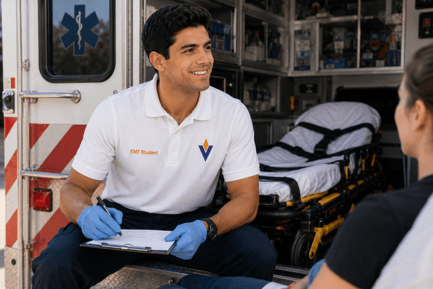
What Is an EMT?
An Emergency Medical Technician is a healthcare professional trained to provide prehospital emergency medical care.
EMTs respond to situations such as:
- Medical emergencies
- Motor vehicle accidents
- Falls
- Traumatic injuries
- Breathing emergencies
- Cardiac emergencies
- Allergic reactions
- Diabetic emergencies
- Other urgent medical situations
EMTs assess patients, provide care within their authorized scope of practice, and help transport patients safely to appropriate healthcare facilities.
What Are the Main Duties of an EMT?
An EMT’s responsibilities can vary depending on the emergency, employer, state requirements, and level of certification.
Common responsibilities may include:
- Assessing a patient’s condition
- Checking and monitoring vital signs
- Providing CPR and basic life support
- Managing basic airway and breathing emergencies
- Controlling external bleeding
- Providing basic care for injuries
- Assisting with patient movement
- Preparing patients for transportation
- Communicating with dispatchers and healthcare professionals
- Documenting patient information and care
- Maintaining emergency medical equipment
EMTs must be able to use their education and training while adapting to rapidly changing situations.
What Skills Do EMTs Need?
Emergency medical services require more than technical knowledge.
EMTs regularly interact with patients and families during stressful situations, making interpersonal skills especially important.
Successful EMTs often demonstrate:
- Communication
- Compassion
- Critical thinking
- Teamwork
- Problem-solving
- Attention to detail
- Adaptability
- Time management
- Physical stamina
- Professionalism
- Ability to remain calm under pressure
EMTs also need to follow instructions and established emergency medical protocols carefully.
Where Do EMTs Work?
EMTs can work in several emergency response and healthcare environments.
Potential employers may include:
- Ambulance services
- Fire departments
- Emergency medical service agencies
- Hospitals
- Private medical transportation companies
- Municipal emergency response organizations
- Public safety agencies
Specific employment requirements vary depending on the position, location, and employer.
What Is It Like Working as an EMT?
Working as an EMT can be fast-paced and unpredictable.
One call may involve helping someone experiencing a medical emergency, while the next could involve responding to an accident or injury.
EMTs may work:
- Days
- Nights
- Weekends
- Holidays
- Extended shifts
Because emergencies can happen at any time, individuals considering the profession should be comfortable with a work environment that may change quickly.
Is Becoming an EMT Right for You?
EMT training may be a good choice for individuals who want to enter healthcare and enjoy active, hands-on work.
You may enjoy this career if you:
- Want to help people during emergencies
- Are interested in healthcare
- Enjoy working as part of a team
- Can remain focused in stressful situations
- Prefer an active work environment
- Communicate well with others
- Want to develop practical healthcare skills
- Are interested in emergency medicine
EMT experience can also provide valuable exposure to healthcare for individuals who later decide to continue their education.
EMT Training at CMVC
At CMVC, students can receive career-focused EMT education designed to develop foundational emergency medical knowledge and practical skills.
Students learn concepts related to patient assessment, emergency care, safety, communication, and transportation while gaining experience practicing important EMT skills.
Through classroom instruction and practical learning, CMVC helps students build confidence as they prepare to take the next steps toward an emergency medical services career.
What You Will Learn
EMT training may include instruction in:
- Patient assessment
- CPR and basic life support
- Airway management
- Medical emergencies
- Trauma emergencies
- Bleeding and shock
- Patient movement and transportation
- Emergency communication
- Documentation
- Ambulance operations
- Infection control and safety
- Professional responsibilities
Students can develop knowledge and practical skills that prepare them for situations they may encounter in emergency medical environments.
Admission Requirements
Admission requirements may vary based on the program and applicable requirements.
Prospective students should be prepared to:
- Meet program admission requirements
- Provide required educational documentation
- Complete applicable enrollment requirements
- Submit identification and enrollment paperwork
- Meet any additional eligibility requirements
- Speak with an admissions representative
CMVC’s admissions team can provide current information about EMT program requirements and guide prospective students through the enrollment process.
Career Opportunities for EMT Graduates
After completing applicable education and certification requirements, graduates may pursue entry-level EMT opportunities.
Potential work environments include:
- Ambulance services
- Emergency medical service agencies
- Fire and rescue organizations
- Medical transportation companies
- Healthcare facilities
- Public safety organizations
Employment and certification requirements vary by employer and location.
Begin Your EMT Career at CMVC
EMTs play an important role in emergency healthcare by responding when patients need immediate assistance. For individuals who enjoy helping others, working as part of a team, and handling new challenges, becoming an EMT may provide a meaningful career path.
CMVC provides career-focused EMT education designed to help students develop emergency medical knowledge, practical skills, and confidence.
If you’re ready to take the first step toward a career in emergency medical services, contact CMVC today to learn more about EMT training, admission requirements, and upcoming enrollment opportunities.