

When you visit a doctor, hospital, or other healthcare provider, the information from that visit becomes part of your medical record. Diagnoses, procedures, treatments, and services must be accurately documented so healthcare organizations can maintain records and properly process insurance claims.
Medical coders play an important role in that process.
If you’re considering a healthcare career but prefer working with information, technology, and documentation rather than providing direct patient care, you may be wondering, “What does a medical coder do?”
Medical coding professionals help translate healthcare information into standardized codes used throughout the healthcare system.
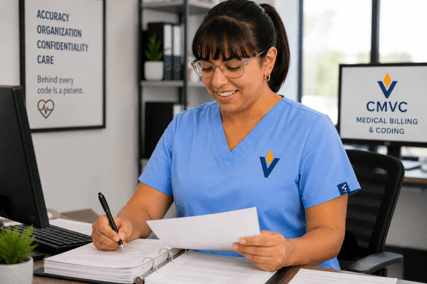
What Is Medical Coding?
Medical coding is the process of reviewing healthcare documentation and assigning standardized codes to diagnoses, procedures, treatments, and healthcare services.
These codes can be used for purposes such as:
- Insurance claims
- Healthcare reimbursement
- Medical documentation
- Patient records
- Administrative reporting
- Healthcare data
- Compliance processes
Accurate coding helps healthcare organizations maintain organized records and supports the billing and reimbursement process.
What Does a Medical Coder Do?
Medical coders review healthcare documentation and identify the appropriate codes for services and diagnoses.
Their responsibilities may include:
- Reviewing patient medical records
- Interpreting healthcare documentation
- Assigning appropriate medical codes
- Checking records for accuracy
- Identifying missing or unclear documentation
- Following coding guidelines
- Maintaining patient confidentiality
- Working with electronic health record systems
- Supporting insurance claims and reimbursement processes
- Communicating with healthcare administrative teams
Because small errors can affect documentation and billing, attention to detail is particularly important in medical coding.
Medical Billing vs. Medical Coding: What’s the Difference?
Medical billing and medical coding are closely connected, but they aren’t exactly the same.
Medical coders review healthcare documentation and assign standardized codes.
Medical billers use coding and other patient information to help prepare and process healthcare claims and billing documentation.
Depending on the employer, some professionals may perform responsibilities related to both billing and coding.
Together, these functions help healthcare providers document services and receive appropriate reimbursement.
What Skills Does a Medical Coder Need?
Medical coding requires professionals to work carefully with detailed healthcare information.
Important skills can include:
- Attention to detail
- Organization
- Computer skills
- Critical thinking
- Time management
- Problem-solving
- Professional communication
- Ability to work independently
- Understanding of medical terminology
- Commitment to accuracy
- Confidentiality and professionalism
Because healthcare documentation and coding guidelines can evolve, professionals should also be prepared to continue learning throughout their careers.
Do Medical Coders Work With Patients?
Medical coding is generally considered a behind-the-scenes healthcare career.
Unlike nurses, EMTs, medical assistants, and other clinical healthcare professionals, medical coders typically do not provide direct patient care.
Instead, they work with the information created during patient care.
This can make medical coding appealing to individuals who:
- Want to work in healthcare
- Prefer administrative responsibilities
- Enjoy working with computers
- Like detailed and organized work
- Are interested in healthcare terminology
- Prefer limited direct patient-care responsibilities
Where Do Medical Coders Work?
Medical coding skills are used throughout the healthcare industry.
Potential employers may include:
- Hospitals
- Physician practices
- Outpatient clinics
- Specialty medical offices
- Long-term care facilities
- Medical billing companies
- Insurance organizations
- Other healthcare organizations
Specific job responsibilities and work arrangements depend on the employer.
What Do You Need to Learn to Become a Medical Coder?
Medical coding professionals need to understand both healthcare terminology and coding processes.
Training may include:
- Medical terminology
- Anatomy and physiology
- Diagnosis coding
- Procedure coding
- Healthcare reimbursement
- Insurance claims
- Electronic health records
- Medical office procedures
- Healthcare laws and ethics
- Documentation
- Professional communication
Developing this foundation can help students understand how clinical information becomes part of healthcare’s administrative and reimbursement systems.
Medical Billing and Coding Training at CMVC
CMVC provides career-focused Medical Billing and Coding education designed to prepare students for entry-level opportunities within healthcare administration.
Through classroom instruction and practical learning, students can develop knowledge related to medical terminology, coding systems, healthcare reimbursement, insurance procedures, and electronic records.
Students can also strengthen important professional skills such as organization, accuracy, communication, and attention to detail.
What You Will Learn
Students in CMVC’s Medical Billing and Coding program may study areas including:
- Medical terminology
- Anatomy and physiology
- Medical coding systems
- Healthcare reimbursement
- Insurance claims procedures
- Electronic health records
- Medical office procedures
- Healthcare laws and ethics
- Documentation
- Record management
- Professional communication
The goal is to help students build a foundation they can use as they prepare to pursue opportunities within healthcare administration.
Admission Requirements
Admission requirements vary depending on the program.
Prospective students should be prepared to:
- Meet program admission requirements
- Provide required educational documentation
- Complete required admissions steps
- Submit identification and enrollment paperwork
- Meet applicable eligibility requirements
- Speak with an admissions representative
CMVC’s admissions team can provide current program information and help prospective students understand the enrollment process.
Career Opportunities for Medical Billing and Coding Graduates
Graduates may pursue entry-level opportunities in healthcare administrative settings.
Potential career titles can include:
- Medical Billing Specialist
- Medical Coding Specialist
- Medical Records Technician
- Insurance Claims Specialist
- Health Information Technician
- Billing Coordinator
- Revenue Cycle Support Specialist
- Healthcare Administrative Support
Specific titles and qualification requirements vary by employer.
Begin Your Medical Billing and Coding Career at CMVC
Medical coders play an important behind-the-scenes role in healthcare. Their work helps transform clinical documentation into standardized information used for records, insurance claims, and reimbursement.
For students who enjoy organization, technology, healthcare terminology, and detailed work, medical billing and coding may offer an opportunity to build a healthcare career without providing direct patient care.
CMVC provides career-focused Medical Billing and Coding education designed to help students develop the foundational knowledge and practical skills needed for entry-level opportunities.
If you’re ready to explore a future in healthcare administration, contact CMVC today to learn more about the Medical Billing and Coding program and take the next step toward your career.