

Head injuries can happen unexpectedly, whether from a car accident, sports injury, workplace accident, fall, or other type of trauma. While some head injuries are minor, others can cause serious complications that require immediate medical attention.
Knowing when a head injury is dangerous can help people recognize when emergency care is necessary. For Emergency Medical Technicians, identifying potentially serious head injuries is an important part of patient assessment and trauma care.
EMTs are often among the first healthcare professionals to evaluate someone after a traumatic injury. They must be able to recognize warning signs, monitor the patient’s condition, and provide appropriate emergency care while arranging transportation to a medical facility.
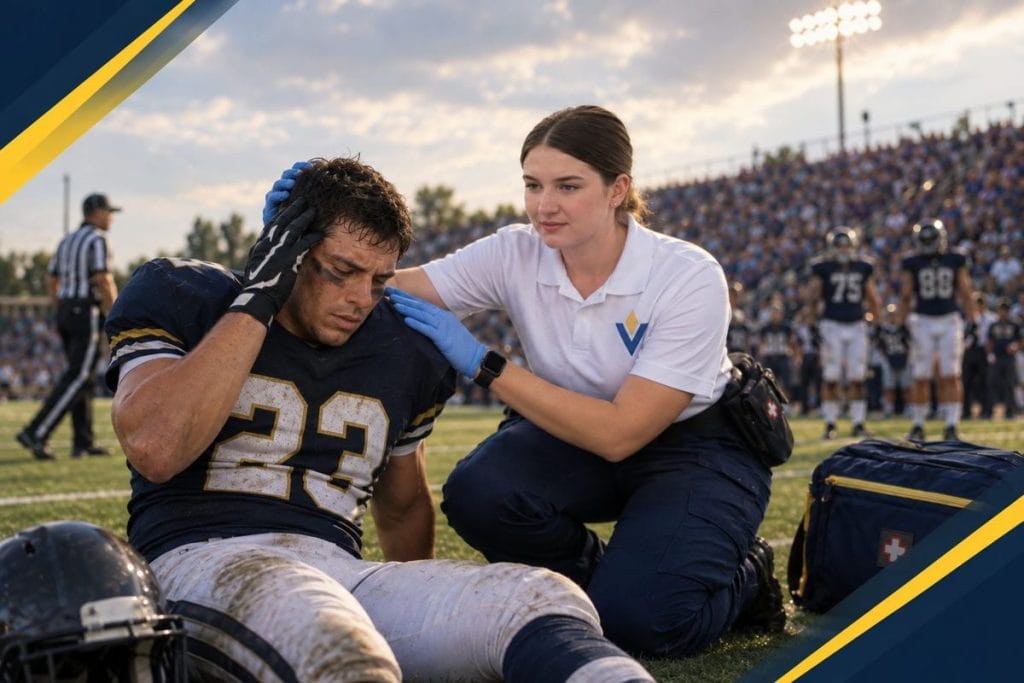
What Makes a Head Injury Dangerous?
A head injury can be dangerous when it causes damage to the brain, skull, or surrounding tissues. Some serious injuries may not have obvious external signs, which is why changes in a person’s behavior or physical condition can be especially important.
A potentially serious head injury can result from:
- Motor vehicle accidents
- Falls from significant heights
- Sports-related impacts
- Physical assaults
- Workplace accidents
- Bicycle or motorcycle accidents
- Penetrating injuries
- Hard impacts to the head
Even when a person appears fine immediately after an injury, symptoms can sometimes develop or become worse later.
When Is a Head Injury an Emergency?
A head injury should be treated as a medical emergency when someone develops serious symptoms, loses consciousness, experiences significant confusion, or has other concerning changes following trauma.
Call 911 or seek emergency medical care for serious symptoms such as:
- Loss of consciousness
- Seizures
- Severe or worsening headache
- Repeated vomiting
- Increasing confusion
- Extreme drowsiness or difficulty staying awake
- Difficulty speaking
- Weakness or numbness
- Problems with balance or coordination
- Unequal pupils
- Significant bleeding from the head
- Clear fluid or blood coming from the nose or ears
- Difficulty breathing
These symptoms may indicate a serious brain or skull injury and require prompt evaluation.
Can a Head Injury Be Serious Without Bleeding?
Yes. A dangerous head injury does not always cause visible bleeding.
The brain can be injured even when the skin is not significantly damaged. For example, a person can experience a concussion or bleeding inside the skull following a strong impact.
This is one reason EMTs perform thorough patient assessments rather than relying only on visible injuries.
What Are the Warning Signs of a Concussion?
A concussion is a type of traumatic brain injury that can occur after a blow or jolt to the head or body causes the brain to move rapidly inside the skull.
Possible symptoms include:
- Headache
- Dizziness
- Confusion
- Memory problems
- Difficulty concentrating
- Nausea
- Sensitivity to light or noise
- Feeling unusually tired
- Changes in coordination
A person with a suspected concussion should be evaluated by a healthcare professional, particularly if symptoms are severe, worsening, or accompanied by emergency warning signs.
Why Symptoms Can Get Worse After a Head Injury
Some serious complications may not become immediately obvious. Swelling or bleeding inside the skull can cause pressure on the brain, potentially leading to worsening symptoms.
This is why monitoring a person after a significant head injury is important.
Changes such as increasing confusion, worsening headache, repeated vomiting, unusual sleepiness, seizures, or loss of consciousness require immediate medical attention.
How EMTs Assess a Head Injury
When EMTs arrive at the scene of a head injury, they begin by assessing the patient’s overall condition and looking for immediate threats to life.
They may evaluate:
- Airway
- Breathing
- Circulation
- Level of consciousness
- Pupillary response
- Motor function
- Signs of bleeding
- Other injuries
EMTs also ask questions about how the injury occurred and whether the patient’s symptoms have changed since the incident.
How EMTs Help Patients With Head Injuries
EMTs provide pre-hospital care designed to stabilize patients and prevent their condition from becoming worse before they reach a hospital.
Depending on the situation, emergency care may involve:
- Maintaining the patient’s airway
- Supporting breathing
- Controlling external bleeding
- Monitoring vital signs
- Assessing neurological status
- Taking precautions to protect the spine when indicated
- Safely transporting the patient
- Communicating important information to the receiving medical team
The exact treatment depends on the patient’s condition and the circumstances surrounding the injury.
Why EMTs Need Strong Trauma Assessment Skills
Head injuries demonstrate why EMTs need strong observation and assessment skills. A patient may have an injury that is not immediately visible, so EMTs must pay attention to symptoms, medical history, physical findings, and changes in the patient’s condition.
EMT training helps students develop the ability to remain focused and make appropriate decisions during stressful situations.
Students learn how to:
- Assess trauma patients
- Recognize life-threatening conditions
- Provide Basic Life Support
- Manage airway emergencies
- Control bleeding
- Use emergency medical equipment
- Work safely at an emergency scene
- Communicate effectively with other healthcare professionals
EMT Training at Compumed Vocational Careers in Florida
For students interested in becoming an EMT in Florida, Compumed Vocational Careers offers an Emergency Medical Technician program designed to prepare students for real-world emergency situations.
The program combines classroom education with hands-on simulations and clinical experience. Students develop practical skills that can help prepare them for the responsibilities of working in emergency medical services.
How Long Is the CMVC EMT Program?
The EMT program at Compumed Vocational Careers can be completed in:
4 months, or 16 weeks
The program includes:
300 total hours
Students receive in-person training focused on emergency medical care, patient assessment, trauma management, and emergency response.
What Do Students Learn in the CMVC EMT Program?
Students receive training in essential emergency medical skills, including:
- Pre hospital care for medical emergencies
- Basic Life Support and airway management
- Patient assessment and trauma management
- Use of medical equipment
- Safe patient transport
- Emergency protocols
- Effective teamwork
These skills help prepare students to respond to a wide variety of medical and traumatic emergencies.
CMVC EMT Program Admission Requirements
Students interested in the EMT program must meet the following admission requirements:
- Be at least 18 years old
- Have a high school diploma or GED
- Provide valid identification and a Social Security Number
- Complete a medical exam
- Have up-to-date vaccinations
- Complete a drug test
- Have CPR or Basic Life Support certification or complete it during the program
Previous healthcare experience is not required.
Where Can EMTs Work in Florida?
After completing EMT training and meeting applicable certification requirements, graduates may pursue opportunities in several healthcare and emergency response settings.
Potential work environments include:
- Ambulance services
- Fire departments with EMS
- Emergency rooms and urgent care clinics
- Medical transport companies
An EMT career can provide an opportunity to gain valuable healthcare experience while helping patients during some of their most critical moments.
Start Your EMT Career at Compumed Vocational Careers
Knowing when a head injury is dangerous is an important part of recognizing emergency situations. EMTs must be prepared to assess patients, identify warning signs, provide appropriate pre-hospital care, and safely transport patients for further medical evaluation.
At Compumed Vocational Careers, students can build these skills through a 4-month, 300-hour EMT program that combines classroom instruction, hands-on simulations, and clinical experience.
If you are looking for a healthcare career where you can make a difference in emergency situations, EMT training can be an excellent place to begin. Explore the EMT program at Compumed Vocational Careers and take the first step toward a career in emergency medical services.