

Severe bleeding is one of the most serious medical emergencies an EMT may encounter. When a person loses a significant amount of blood, the body can quickly go into shock, and the situation can become life-threatening. Knowing how EMTs stop severe bleeding is an important part of emergency medical care and one of the skills students learn when preparing for a career in Emergency Medical Services.
EMTs are trained to quickly identify life-threatening bleeding, control blood loss, assess the patient, and provide appropriate care while arranging transportation to a hospital. Their ability to remain calm and act quickly can make a significant difference during an emergency.
Why Severe Bleeding Is a Medical Emergency
Blood carries oxygen and nutrients throughout the body. When a person experiences severe blood loss, vital organs may not receive enough oxygen to function properly.
Severe bleeding can result from:
- Motor vehicle accidents
- Workplace injuries
- Falls
- Serious cuts or lacerations
- Penetrating injuries
- Severe burns
- Traumatic injuries
Because blood loss can progress quickly, EMTs must assess the situation and begin appropriate treatment as soon as possible.
How Do EMTs Stop Severe Bleeding?
EMTs use several techniques and medical supplies to control severe bleeding. The method used depends on the location and severity of the injury.
Some of the most important techniques include direct pressure, wound packing, and tourniquet application.
Applying Direct Pressure
Direct pressure is one of the first techniques used to control external bleeding.
An EMT may place gauze or another appropriate dressing over the wound and apply firm, consistent pressure. Maintaining pressure can help slow or stop bleeding and allow the body’s natural clotting process to begin.
EMTs are trained to recognize when bleeding requires additional interventions beyond basic pressure.
Using Pressure Dressings
Once bleeding is controlled, EMTs may use a pressure dressing to maintain pressure over the wound.
A pressure dressing can help:
- Keep pressure on the injury
- Maintain bleeding control
- Protect the wound from contamination
- Allow the patient to be transported safely
The dressing must be applied appropriately and the patient’s condition must continue to be monitored.
Packing Certain Wounds
Some wounds, particularly deep wounds in areas where a tourniquet cannot be applied, may require wound packing.
During wound packing, trained responders place appropriate gauze into the wound and apply pressure to help control bleeding.
This technique requires proper training because the responder must understand where and how the technique can be safely used.
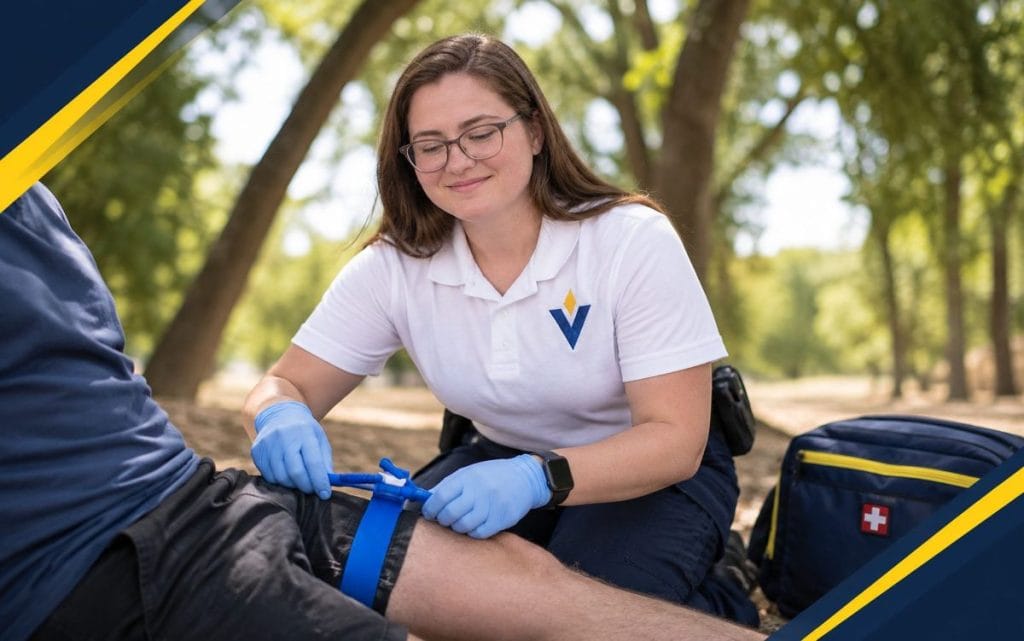
Using a Tourniquet for Life-Threatening Limb Bleeding
A tourniquet can be used for certain types of severe bleeding from an arm or leg when bleeding cannot be adequately controlled with other methods or when the situation requires immediate hemorrhage control.
Tourniquets work by applying pressure around the limb to restrict blood flow to the injured area.
EMTs must be trained in proper tourniquet selection, placement, and monitoring. A tourniquet should not be applied casually because incorrect use can cause additional injury.
EMTs Also Treat the Effects of Blood Loss
Stopping the bleeding is only part of the emergency response. EMTs also monitor the patient for signs that the body is struggling to compensate for blood loss.
Potential warning signs can include:
- Pale or cool skin
- Rapid breathing
- Rapid heart rate
- Weakness
- Confusion
- Dizziness
- Loss of consciousness
Significant blood loss can lead to shock, making rapid assessment and treatment especially important.
EMTs Monitor and Stabilize the Patient
After controlling bleeding, EMTs continue assessing the patient throughout the emergency.
They may monitor:
- Breathing
- Pulse
- Blood pressure
- Level of consciousness
- Skin condition
- Overall response to treatment
EMTs also prepare the patient for transportation and communicate important information to receiving healthcare professionals.
Why EMTs Need Strong Trauma Assessment Skills
Severe bleeding is often associated with trauma, which means EMTs must know how to assess the entire patient rather than focusing only on the visible wound.
A patient may have internal injuries that are not immediately obvious. EMTs are trained to look for signs of additional injuries and determine which conditions require immediate attention.
This combination of observation, assessment, and hands-on treatment is an important part of emergency medical training.
How EMT Training Prepares Students to Control Severe Bleeding
Students preparing for an EMT career learn emergency techniques through classroom instruction, skills practice, and realistic simulations.
Training can help students develop the ability to:
- Recognize life-threatening bleeding
- Perform patient assessments
- Apply bleeding control techniques
- Provide Basic Life Support
- Manage trauma emergencies
- Use emergency medical equipment
- Communicate effectively with other healthcare professionals
- Remain calm while working under pressure
Hands-on practice is especially valuable because EMTs must be able to perform these skills efficiently during stressful situations.
EMT Training at Compumed Vocational Careers in Florida
For students interested in becoming an EMT in Florida, Compumed Vocational Careers offers an Emergency Medical Technician program designed to provide practical preparation for emergency medical situations.
The program combines theory, hands-on training, simulations, and clinical experience so students can build applicable skills before entering the workforce.
EMT Program Duration
The CMVC EMT program can be completed in:
4 months, or 16 weeks
The program includes 300 total hours of training.
Students receive in-person instruction focused on emergency response and patient care.
What Students Learn at CMVC
The EMT program covers important skills that future emergency medical professionals can use in the field, including:
- Pre hospital care for medical emergencies
- Basic Life Support and airway management
- Patient assessment and trauma management
- Use of medical equipment
- Safe patient transport
- Emergency protocols
- Effective teamwork
Students also work toward developing the ability to assess and stabilize patients during crisis situations and perform life-saving procedures safely and professionally.
EMT Program Admission Requirements
Students interested in the CMVC EMT program must meet the following admission requirements:
- Be at least 18 years old
- Have a high school diploma or GED
- Provide a valid ID and Social Security Number
- Complete a medical exam
- Have up-to-date vaccinations
- Complete a drug test
- Have CPR or Basic Life Support certification, or complete it during the program
Previous healthcare experience is not required.
Where Can EMTs Work in Florida?
After completing EMT training and meeting applicable certification requirements, graduates may pursue opportunities in several healthcare and emergency response settings.
Potential work environments include:
- Ambulance services
- Fire departments with EMS
- Emergency rooms and urgent care clinics
- Medical transport companies
Florida offers opportunities for individuals interested in emergency medical services and patient care.
Start Your EMT Career at Compumed Vocational Careers
Learning how EMTs stop severe bleeding provides just one example of the important responsibilities emergency medical professionals take on every day. EMTs must be prepared to assess injuries, control life-threatening bleeding, stabilize patients, and provide care while transporting them to a medical facility.
At Compumed Vocational Careers, students can develop these essential skills through a 4-month, 300-hour EMT program that combines classroom learning with hands-on simulations and clinical experience.
If you are interested in a healthcare career where you can help people during some of their most critical moments, an EMT career may be a strong place to start. Explore the EMT program at CMVC and take the first step toward a career in emergency medical services.