

A spinal injury can happen suddenly during a car accident, sports injury, fall, workplace accident, or other traumatic event. Because the spinal cord plays an important role in communication between the brain and the rest of the body, an injury to the spine can potentially cause serious and permanent complications.
Knowing what to do if someone has a spinal injury is important. The wrong movement can potentially make an injury worse, which is why people should avoid moving an injured person unnecessarily and seek emergency medical help when a serious spinal injury is suspected.
For anyone interested in becoming an Emergency Medical Technician, understanding spinal injuries is also an important part of learning how to assess and care for patients during emergencies.
What Is a Spinal Injury?
A spinal injury involves damage to the bones, ligaments, discs, nerves, or spinal cord that make up the spine. Spinal injuries can range from minor injuries to life threatening trauma involving the spinal cord.
The spinal cord is a major part of the nervous system. Damage to the spinal cord can affect movement, sensation, and other body functions below the area of the injury.
Some spinal injuries are not immediately obvious. A person may be awake and talking while still having a serious injury, which is why traumatic incidents should be taken seriously.
Common Causes of Spinal Injuries
Spinal injuries can occur in many different situations. Common causes include:
- Motor vehicle accidents
- Motorcycle and bicycle accidents
- Falls from significant heights
- Sports injuries
- Diving accidents
- Workplace accidents
- Physical trauma
- Crushing injuries
High impact accidents can place significant force on the head, neck, and back. In these situations, emergency responders must consider the possibility of a spinal injury even when there are no obvious external signs.
Signs and Symptoms of a Spinal Injury
A person with a spinal injury may experience different symptoms depending on the location and severity of the injury.
Potential warning signs include:
- Severe neck or back pain
- Weakness or numbness
- Tingling or loss of sensation
- Difficulty moving the arms or legs
- Loss of coordination
- Difficulty walking or standing
- Changes in sensation below an injured area
- Loss of bladder or bowel control
- An unusual position of the head, neck, or spine
- Difficulty breathing in serious cases
A person does not need to have every symptom for a spinal injury to be possible. After significant trauma, emergency medical evaluation may be necessary even if the person initially appears stable.
What to Do If Someone Has a Spinal Injury
If you suspect someone has a spinal injury, the most important priority is to prevent additional injury while emergency help is being contacted.
1. Call 911
Call 911 or your local emergency number if someone may have suffered a serious spinal injury, especially after a major accident, fall, or other traumatic event.
Provide the dispatcher with information about what happened, the person’s condition, and your location. Follow the dispatcher’s instructions while waiting for emergency responders.
2. Do Not Move the Person Unnecessarily
Unless there is an immediate danger, avoid moving the injured person. Moving someone with a potential spinal injury can increase the risk of additional damage.
Do not attempt to straighten the person’s neck or back.
If the person is lying on the ground, encourage them to remain still while waiting for emergency personnel.
3. Keep the Person as Still as Possible
If the person is conscious, encourage them not to move their head, neck, or back.
Stay with them and monitor their condition while waiting for help. Keeping the person calm can also help prevent unnecessary movement.
4. Do Not Remove a Helmet Unless Necessary
If the injured person is wearing a helmet, such as after a motorcycle, bicycle, or sports accident, do not remove it unless necessary to address an immediate life threatening problem and you are instructed to do so by emergency professionals.
5. Monitor Breathing and Responsiveness
Pay attention to whether the person is breathing normally and whether they remain responsive.
If the person becomes unresponsive and is not breathing normally, emergency dispatchers can provide instructions for CPR and other immediate actions. In a life threatening situation, maintaining the person’s airway and circulation takes priority.
6. Follow Emergency Dispatcher Instructions
Emergency dispatchers can provide instructions based on the specific circumstances. Follow their directions until trained emergency personnel arrive.
Avoid attempting advanced medical procedures if you are not trained to perform them.
What Should You Not Do for a Spinal Injury?
When a spinal injury is suspected, certain actions can create unnecessary risk.
Avoid:
- Moving the person without a reason
- Asking the person to stand or walk
- Twisting or straightening the neck or back
- Removing a helmet unnecessarily
- Giving the person food or drinks
- Attempting to treat a serious spinal injury yourself
The safest approach for an untrained bystander is generally to call for emergency help, keep the person as still as possible, monitor their condition, and follow dispatcher instructions.
When Is a Spinal Injury an Emergency?
A suspected spinal injury should be treated seriously after significant trauma, particularly when the person has symptoms involving movement, sensation, consciousness, or breathing.
Call 911 immediately if someone has suffered a major accident or injury and has signs such as severe neck or back pain, numbness, weakness, difficulty moving, loss of sensation, or problems breathing.
Even when symptoms appear mild, a healthcare professional should evaluate a potentially serious traumatic injury.
How EMTs Respond to Spinal Injuries
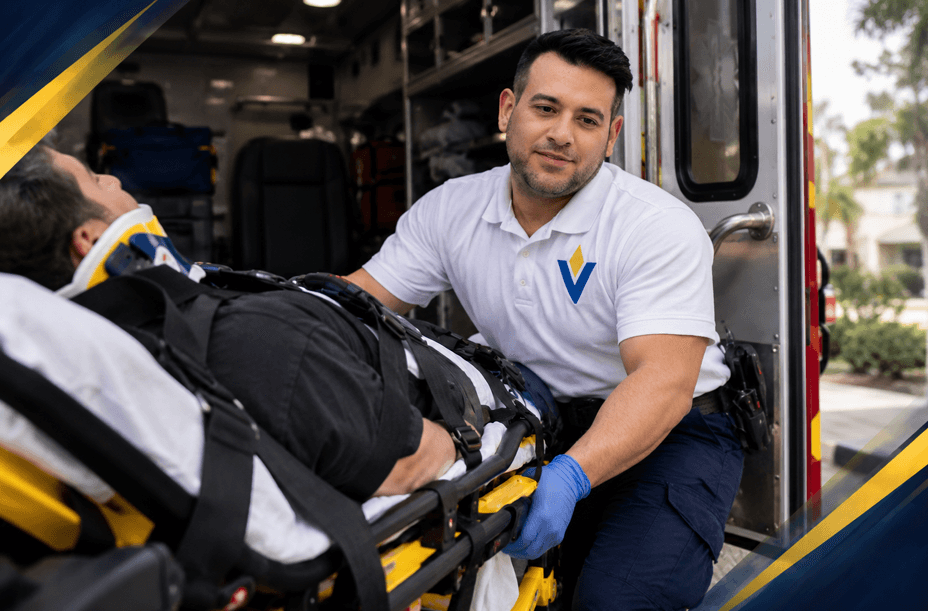
When EMTs arrive at the scene, they begin by evaluating the patient’s condition and determining what type of care is needed.
Depending on the circumstances, EMTs may:
- Assess the patient’s airway, breathing, and circulation
- Evaluate the patient’s level of consciousness
- Look for signs of trauma
- Assess sensation and movement
- Identify potential injuries
- Help prevent unnecessary movement
- Provide appropriate emergency care within their scope of practice
- Use medical equipment to help safely move or transport the patient
- Communicate important findings to other healthcare professionals
- Transport the patient for further medical evaluation when indicated
Spinal injury management requires careful assessment and teamwork. EMTs must be able to remain focused and follow emergency protocols while working in unpredictable environments.
Why Spinal Injury Training Matters for EMTs
Spinal injuries are one example of why EMT education involves much more than learning basic first aid.
EMTs need to understand how to assess trauma patients, recognize potentially serious injuries, provide appropriate emergency care, and safely transport patients for additional treatment.
Training also helps future EMTs develop the ability to communicate effectively with patients, families, dispatchers, other emergency responders, and healthcare professionals.
For students interested in emergency medicine, learning how to respond to traumatic injuries can be an important part of preparing for a career in emergency medical services.
Become an EMT in Florida With CMVC
If you are interested in learning how to respond to emergencies and help people during critical situations, an EMT career can provide a path into healthcare.
CompuMed Vocational Careers (CMVC) offers an Emergency Medical Technician program designed for students who want hands-on preparation for emergency medical work.
The CMVC EMT program takes 4 months, or 16 weeks, and includes 300 total hours of training. The program is conducted in person and includes simulations and clinical experience to help students develop practical skills.
What You Will Learn in CMVC’s EMT Program
Students receive training in areas including:
- Pre-hospital care for medical emergencies
- Basic Life Support (BLS) and airway management
- Patient assessment and trauma management
- Medical equipment and safe patient transport
- Emergency protocols and effective teamwork
These skills can help students prepare to assess patients, respond appropriately during emergencies, and work professionally in high pressure situations.
EMT Program Admission Requirements
To enroll in the CMVC EMT program, students must:
- Be at least 18 years old
- Have a high school diploma or GED
- Have a valid ID and Social Security Number
- Complete a medical exam
- Have up-to-date vaccinations
- Complete a drug test
- Have CPR/BLS certification or complete it during the program
Previous healthcare experience is not required for the program.
Where Can EMTs Work?
After completing EMT training and meeting applicable certification requirements, EMTs may pursue opportunities in several healthcare and emergency response settings.
Potential work environments include:
- Ambulance services
- Fire departments with EMS
- Emergency rooms and urgent care clinics
- Medical transport companies
An EMT career can also provide experience for individuals who later decide to pursue additional healthcare or emergency medical education.
Is EMT Training Right for You?
An EMT career may be a good fit for people who want a hands-on healthcare career and are comfortable working in situations that require quick thinking, communication, teamwork, and professionalism.
EMTs may respond to accidents, injuries, medical emergencies, and other unpredictable situations. Because every emergency is different, EMTs must be prepared to assess patients and follow appropriate emergency procedures.
At CMVC, students develop these skills through a combination of classroom instruction, simulations, clinical experience, and guidance from instructors with real-world experience.
Frequently Asked Questions About Spinal Injuries and EMT Training
What should you do if someone has a spinal injury?
Call 911, keep the person as still as possible, and avoid moving their head, neck, or back unless there is an immediate danger. Follow instructions from emergency dispatchers until trained responders arrive.
Should you move someone with a suspected spinal injury?
Generally, do not move someone with a suspected spinal injury unless there is an immediate threat to their safety or emergency circumstances require it. Unnecessary movement can potentially worsen an injury.
What are common signs of a spinal injury?
Possible signs include severe neck or back pain, numbness, tingling, weakness, difficulty moving, loss of sensation, coordination problems, and difficulty breathing.
Do EMTs treat spinal injuries?
EMTs assess patients with suspected spinal injuries, provide appropriate emergency care within their training and scope of practice, help prevent additional injury, and transport patients when necessary for further medical evaluation.
How long is the CMVC EMT program?
The CMVC EMT program takes 4 months, or 16 weeks, and includes 300 total hours of training.
Is the CMVC EMT program in person?
Yes. The CMVC EMT program includes in-person training, simulations, and clinical experience.
Start Your EMT Career in Florida
Knowing what to do if someone has a spinal injury can help bystanders respond appropriately while waiting for professional medical assistance. For EMTs, spinal injury response is part of a broader set of skills needed to assess trauma patients and provide emergency care.
If you are ready to pursue a career helping people during emergencies, CMVC provides in-person EMT training designed to build practical healthcare skills and emergency response knowledge.
In just 4 months, you can begin preparing for a career as an EMT. Apply today and take the first step toward a profession that saves lives.