
Emergency Medical Technicians play a critical role in healthcare by providing immediate care during emergencies. Long before a patient reaches a hospital, EMTs are already delivering life-saving interventions that can make the difference between recovery and serious complications.
If you are considering a career in emergency medical services, understanding how EMTs save lives before reaching the hospital can give you a clear picture of the impact this profession has every day. It also highlights the importance of proper training and why EMT programs focus heavily on real-world skills.
The Importance of Pre-Hospital Care
Pre-hospital care refers to the medical treatment patients receive before arriving at a hospital. This stage is often the most critical, especially in emergencies such as cardiac arrest, trauma, or respiratory distress.
EMTs are trained to act quickly and efficiently during this time. Their goal is to stabilize the patient, prevent the condition from worsening, and prepare for safe transport.
Without this immediate care, many patients would face significantly lower chances of survival.
Rapid Response and Scene Assessment
One of the first ways EMTs save lives is through rapid response. When dispatched to a 911 call, EMTs arrive prepared to assess the situation within seconds.
They begin by:
Ensuring the scene is safe
Evaluating the patient’s condition
Identifying life-threatening issues
This quick assessment allows EMTs to prioritize care and take immediate action.
Airway Management and Breathing Support
Maintaining a patient’s airway is one of the most important responsibilities of an EMT. Without proper breathing, the body cannot get the oxygen it needs to survive.
EMTs provide:
Airway positioning
Oxygen administration
Assistance with breathing devices
These interventions help ensure oxygen reaches vital organs, especially the brain and heart.
Performing Basic Life Support
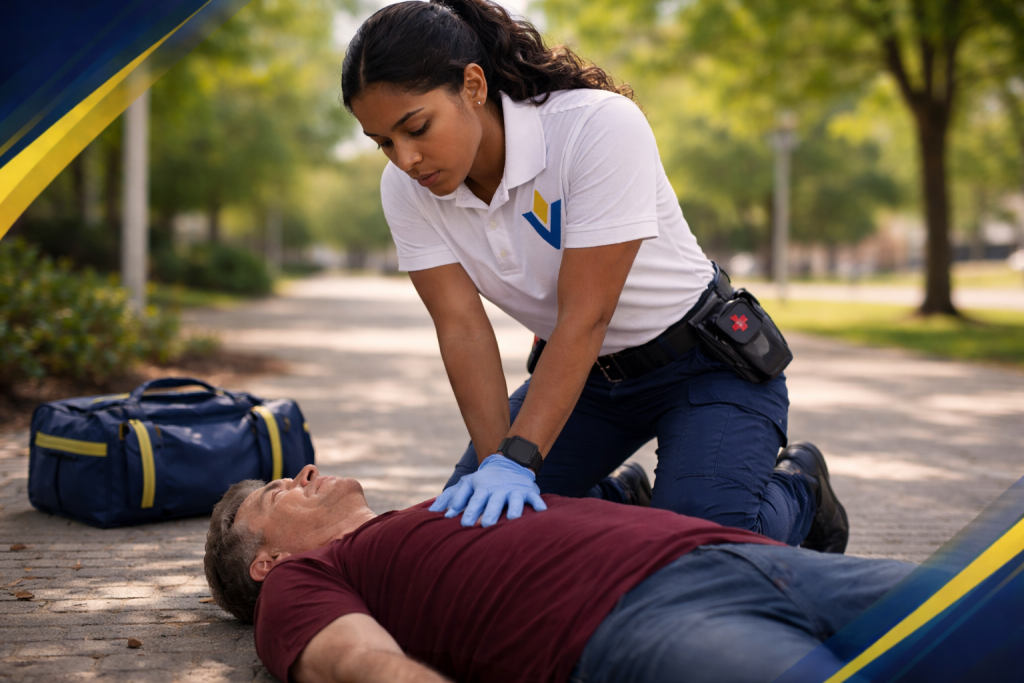
Basic Life Support is a core part of EMT training and a key way EMTs save lives in emergencies.
This includes:
Cardiopulmonary resuscitation (CPR)
Use of automated external defibrillators
Monitoring circulation and vital signs
In cardiac emergencies, these actions can restore circulation and significantly improve survival rates.
Controlling Bleeding and Treating Trauma
In trauma situations, uncontrolled bleeding can quickly become life-threatening. EMTs are trained to manage injuries and prevent further harm.
They may:
Apply pressure to stop bleeding
Use bandages and dressings
Immobilize fractures or spinal injuries
These actions help stabilize the patient until more advanced care is available.
Monitoring and Reassessing the Patient
Patient conditions can change rapidly during emergencies. EMTs continuously monitor vital signs and reassess the patient throughout transport.
This allows them to:
Adjust treatment as needed
Recognize changes in condition
Communicate updates to hospital staff
Ongoing monitoring ensures patients receive the most appropriate care at every stage.
Communication with Hospitals
EMTs do not work alone. They play a key role in preparing hospitals for incoming patients.
Before arrival, EMTs communicate:
Patient condition and symptoms
Treatments already provided
Estimated time of arrival
This coordination allows hospital teams to be ready to continue care immediately, improving patient outcomes.
How EMT Training Prepares You to Save Lives
The ability to perform these life-saving actions comes from structured training and hands-on experience. EMT programs are designed to prepare students for real emergencies before they ever enter the field.
Students learn how to:
Assess patients quickly and accurately
Provide Basic Life Support and airway management
Handle trauma and medical emergencies
Use emergency medical equipment
Work effectively under pressure
Simulation-based training allows students to practice these skills in realistic scenarios.
EMT Training at Compumed Vocational Careers in Florida
For students in Florida who want to develop the skills needed to save lives in emergency situations, Compumed Vocational Careers offers a comprehensive EMT program.
The program focuses on pre-hospital care, giving students the knowledge and hands-on experience required to make a difference before patients reach the hospital.
Program Duration
The EMT program at CMVC is designed for students who want to enter the healthcare field quickly.
Program length: 4 months (16 weeks)
Total training hours: 300 hours
Students receive in-person instruction, simulations, and clinical experience that reflect real emergency scenarios.
What You Will Learn
The curriculum is built around the core responsibilities of EMTs in the field.
Students are trained in:
Pre-hospital care for medical emergencies
Basic Life Support and airway management
Patient assessment and trauma management
Use of medical equipment
Safe patient transport
Emergency protocols and teamwork
This training prepares students to respond confidently and effectively in life-threatening situations.
Admission Requirements
To enroll in the EMT program at Compumed Vocational Careers, applicants must:
Be at least 18 years old
Have a high school diploma or GED
Provide valid identification and a Social Security Number
Complete a medical exam, vaccinations, and drug screening
Hold CPR or Basic Life Support certification or complete it during the program
No prior healthcare experience is required, making this an accessible path into the medical field.
Career Opportunities for EMT Graduates
After completing training and certification, graduates can pursue careers in a variety of healthcare and emergency settings.
These include:
Ambulance services
Fire departments with EMS
Emergency rooms and urgent care clinics
Medical transport companies
With strong demand in Florida and across the United States, EMTs are essential to community health and safety.
Start Your Career Saving Lives at CMVC
Understanding how EMTs save lives before reaching the hospital shows just how important this role is in healthcare. EMTs provide critical care during the most urgent moments, often making a life-changing difference for patients.
If you are ready to begin a meaningful and fast-paced career, EMT training can help you get there.
At Compumed Vocational Careers, students receive hands-on training, real-world experience, and support from experienced instructors.
In just four months, you can start your journey toward becoming an EMT. Apply today and take the first step toward a career dedicated to saving lives.