
Medical emergencies can happen anywhere, at any time. For those considering a career in emergency medical services, understanding the most common places medical emergencies happen provides valuable insight into the day to day reality of being an Emergency Medical Technician.
EMTs are trained to respond quickly in a wide range of environments, from private homes to public spaces. Each setting presents unique challenges, which is why proper training is essential for anyone entering the field.
If you are exploring a future in healthcare, this guide will help you understand where emergencies occur most often and how EMT training prepares you to respond with confidence.
Why Location Matters in Emergency Medical Services
The location of a medical emergency can impact how EMTs assess and treat patients. Factors such as space limitations, crowd presence, and access to equipment all influence how care is delivered.
Training programs prepare EMTs to adapt quickly to different environments while maintaining patient safety and following proper medical protocols.
Most Common Places Medical Emergencies Happen
At Home
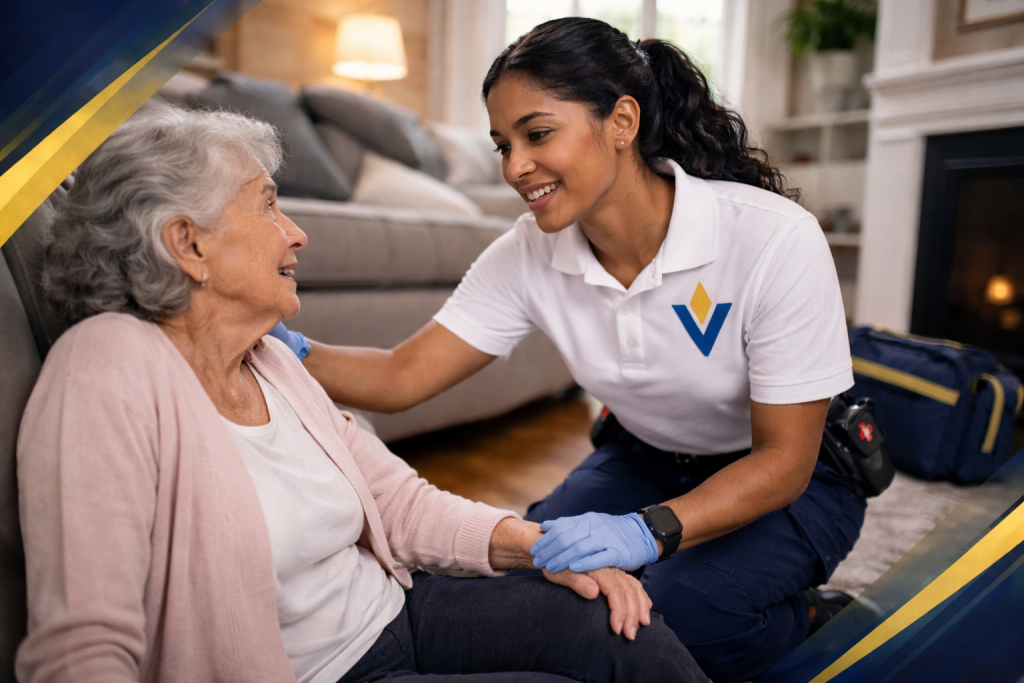
One of the most common places for medical emergencies is in the home. Many 911 calls involve individuals experiencing health issues in a residential setting.
Common home related emergencies include:
Heart attacks and chest pain
Strokes
Falls and injuries
Respiratory distress
Diabetic emergencies
EMTs must be prepared to work in confined spaces and quickly assess patients with limited information.
On the Road
Roadways are another frequent location for emergencies, especially due to motor vehicle accidents.
These situations often involve:
Car crashes
Pedestrian injuries
Motorcycle accidents
EMTs must act quickly to assess trauma, manage injuries, and safely transport patients, often in high risk environments with traffic hazards.
Workplaces
Medical emergencies can also occur in professional settings, including offices, construction sites, and industrial environments.
Common workplace emergencies include:
Falls or equipment related injuries
Heat exhaustion or dehydration
Cardiac events
Each workplace presents different risks, requiring EMTs to adapt their approach based on the situation.
Public Places
Busy public areas are common locations for emergencies due to large crowds and high activity levels.
Examples include:
Shopping centers
Restaurants
Parks and recreational areas
Event venues
EMTs must navigate crowds, manage scene safety, and provide care while maintaining control of the situation.
Schools and Educational Settings
Schools and campuses frequently experience medical incidents, especially involving children and young adults.
Common situations include:
Sports related injuries
Allergic reactions
Asthma attacks
EMTs must communicate effectively with staff and provide care appropriate to the patient’s age and condition.
Healthcare and Assisted Living Facilities
Although these locations are equipped to handle medical situations, EMTs are still frequently called for patient transport or advanced care.
These calls may involve:
Patient transfers
Medical complications
Emergency stabilization
EMTs must coordinate with healthcare staff and follow established protocols.
How EMT Training Prepares You for Any Environment
Because emergencies can happen anywhere, EMT training focuses on adaptability and real world application.
Students learn how to:
Assess patients in different environments
Provide Basic Life Support and airway management
Handle trauma and medical emergencies
Communicate effectively in high pressure situations
Ensure scene safety and proper patient transport
Simulation based training allows students to practice responding to emergencies in settings that reflect real life scenarios.
EMT Training at Compumed Vocational Careers in Florida
For students in Florida who want to be fully prepared for real world emergency situations, Compumed Vocational Careers offers a comprehensive EMT training program.
The program is designed to help students develop the skills needed to respond to emergencies in a wide range of environments.
Program Duration
The EMT program at CMVC allows students to start their careers quickly.
Program length: 4 months (16 weeks)
Total training hours: 300 hours
Students receive in person instruction, hands on simulations, and clinical experience that prepares them for real emergency scenarios.
What You Will Learn
The curriculum focuses on essential skills needed to respond to emergencies in any location.
Students are trained in:
Pre hospital care for medical emergencies
Basic Life Support and airway management
Patient assessment and trauma management
Use of medical equipment
Safe patient transport
Emergency protocols and teamwork
This combination of theory and practical training helps students build confidence and competence in the field.
Admission Requirements
To enroll in the EMT program at Compumed Vocational Careers, applicants must:
Be at least 18 years old
Have a high school diploma or GED
Provide valid identification and a Social Security Number
Complete a medical exam, vaccinations, and drug screening
Hold CPR or Basic Life Support certification or complete it during the program
No previous healthcare experience is required, making this program accessible to individuals starting a new career.
Career Opportunities for EMT Graduates
After completing training and certification, graduates can pursue roles in a variety of healthcare and emergency response settings.
These include:
Ambulance services
Fire departments with EMS
Emergency rooms and urgent care clinics
Medical transport companies
The demand for EMTs remains strong in Florida and across the country, offering stable and meaningful career opportunities.
Start Your EMT Journey at Compumed Vocational Careers
If you are interested in a career where no two days are the same, understanding the most common places medical emergencies happen is an important first step.
With the right training, you can develop the skills needed to respond effectively in any environment, from homes and highways to public spaces and healthcare facilities.
At Compumed Vocational Careers, students receive hands on training, real world experience, and guidance from experienced instructors.
In just four months, you can begin your path toward becoming an EMT. Apply today and take the first step toward a career dedicated to helping others when it matters most.