
Emergency Medical Services (EMS) are evolving rapidly as new technologies transform how care is delivered in the field. For students considering a career as an Emergency Medical Technician, interest in EMT tech integration and telemedicine is growing.
Modern tools are changing how EMTs assess patients, communicate with hospitals, and improve outcomes before a patient even reaches the emergency room.
This article explores how technology and telemedicine are shaping the future of EMS, what this means for EMT careers, and why healthcare education must prepare students for a tech-driven workforce.
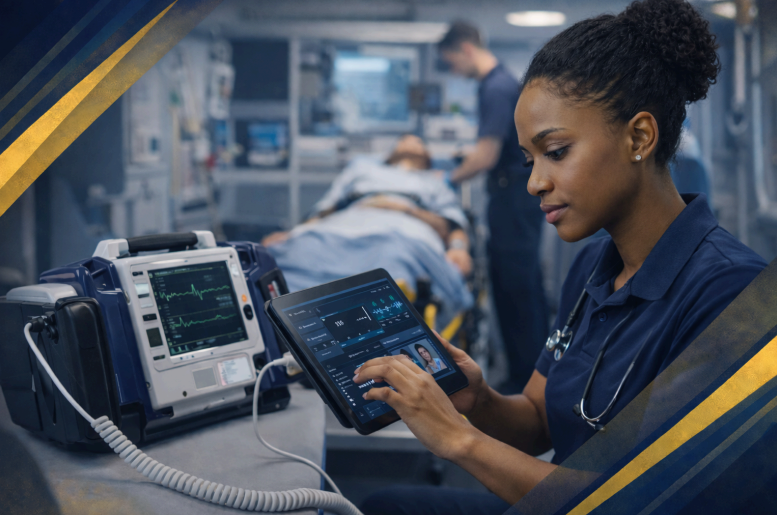
What Is EMT Tech Integration?
EMT tech integration refers to the use of digital tools, connected devices, and advanced communication systems in emergency medical care. These technologies support faster decision-making, improved patient monitoring, and stronger coordination between EMTs and healthcare facilities.
Today’s EMTs rely on technology to:
- Collect and transmit patient data in real time
- Communicate directly with hospital emergency departments
- Use digital reporting and charting systems
- Monitor vital signs with advanced medical equipment
Technology is no longer optional in EMS — it is now a core component of modern emergency care.
The Role of Telemedicine in EMS
Telemedicine allows EMTs to connect remotely with physicians and specialists while still in the field. This capability is especially valuable in time-sensitive or complex medical emergencies.
Through telemedicine, EMTs can:
- Share live patient information with hospital staff
- Receive real-time medical guidance
- Improve treatment decisions during transport
- Reduce delays in emergency department care
Telemedicine helps bridge the gap between prehospital and in-hospital treatment, creating faster, more coordinated patient care.
Why EMT Tech Integration Matters for Career Growth
As EMS systems adopt advanced technologies, employers increasingly seek EMTs who are comfortable using digital tools and modern medical equipment.
Understanding EMT tech integration helps professionals:
- Make faster and more confident clinical decisions
- Communicate efficiently with healthcare teams
- Improve patient safety and documentation accuracy
- Qualify for positions in advanced EMS systems
Technology literacy is becoming a critical skill for long-term career success in emergency medical services.
EMT Technology Integration in Florida
Florida continues to invest heavily in healthcare innovation, including emergency response systems. The state’s growing population and diverse patient needs make technology essential in EMS operations.
Many Florida EMS agencies now use:
- Electronic patient care reporting systems (ePCR)
- Advanced cardiac monitoring devices
- GPS-enabled dispatch and response tools
- Telemedicine connections with hospitals
For students training in Florida, understanding modern EMS technology provides a strong competitive advantage.
How EMT Education Prepares Students for a Tech-Driven Workforce
Quality healthcare education programs go beyond teaching basic clinical skills — they prepare students to work confidently in technology-driven environments.
At Compu-Med Vocational Careers, EMT training emphasizes real-world readiness by introducing students to:
- Modern EMS equipment and monitoring tools
- Digital documentation systems
- Technology-supported patient assessment
- Communication tools used in emergency settings
By learning how technology enhances patient care, students graduate prepared for today’s EMS workplaces and future innovations.
The Future of EMT Careers and Technology
As healthcare continues to evolve, EMTs will play an increasingly important role in connected care systems. Telemedicine, mobile health technology, and data-driven decision-making will continue to shape emergency response.
For prospective students, choosing an EMT career means entering a profession that combines hands-on patient care with cutting-edge technology.
Those who embrace EMT tech integration will be well positioned for career growth, advancement, and long-term success.
Start Your EMT Career in a Modern Healthcare Environment
Interest in EMT tech integration and telemedicine reflects a broader shift toward efficient, patient-centered healthcare.
With the right education and training, students can confidently step into this evolving profession.
Compu-Med Vocational Careers is committed to preparing future EMTs for the realities of modern EMS by combining strong clinical education with exposure to today’s healthcare technology.